
Pakistan | Human Rights & Former PM Jail Conditions.
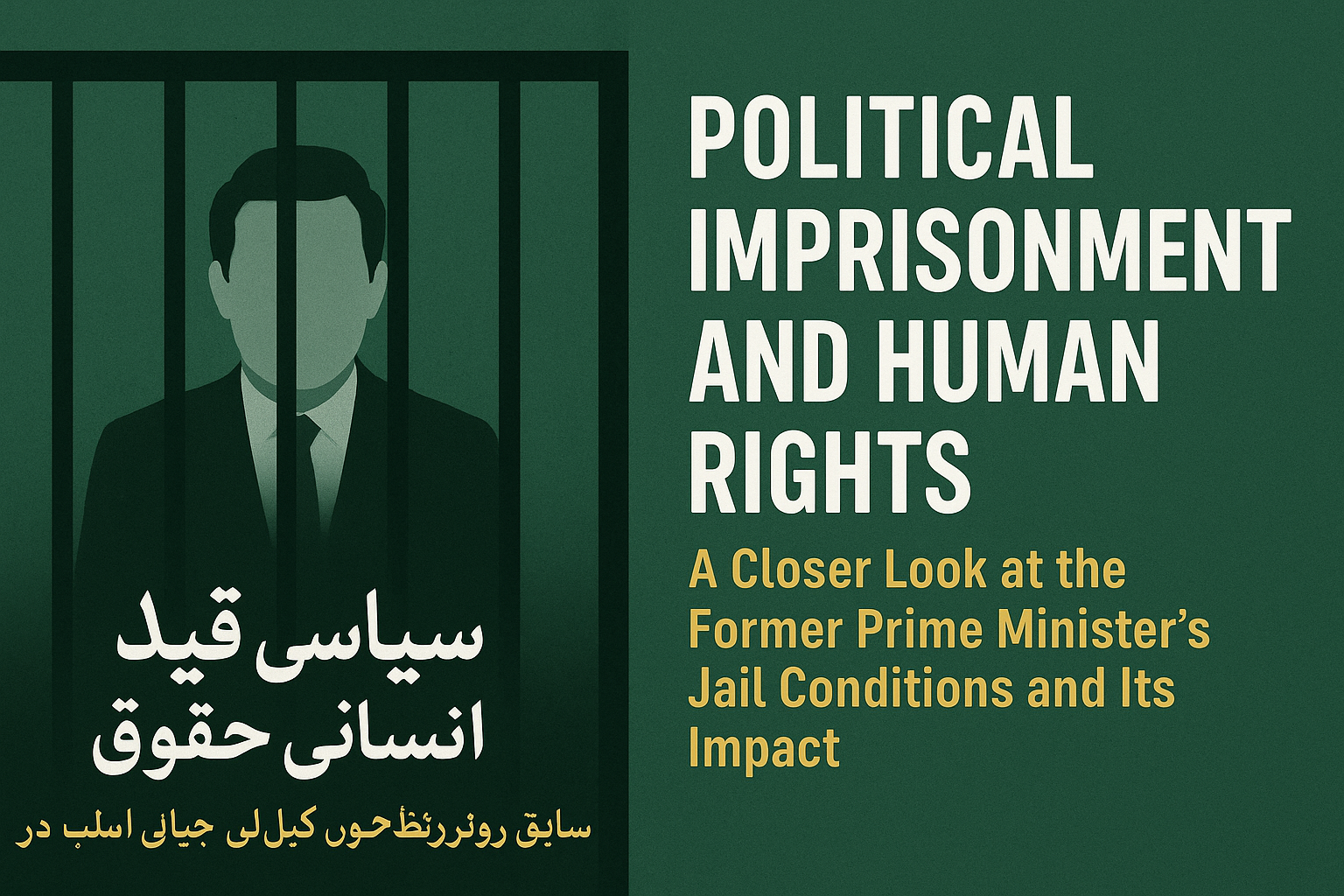
Political Imprisonment and Human Rights — A Closer Look at the Former Prime Minister’s Jail Conditions and Its Impact
Political imprisonment has long been a sensitive and controversial issue in Pakistan’s history. Whenever a prominent political leader is jailed, the situation creates not only political tension but also raises serious concerns about human rights, transparency, justice and democratic continuity. The recent imprisonment of the former Prime Minister has triggered a renewed national debate: Is political imprisonment beneficial or harmful for stability? and what are its long-term consequences?
◼ Jail Conditions of the Former Prime Minister
Reports indicate that the former PM faces limited facilities in prison, restricted access to medical care, and strict regulations on family meetings. His party claims he is being subjected to harsher treatment than ordinary inmates, calling it political victimization.
However, government officials maintain that he is being treated strictly according to the law and is receiving all the rights available to any prisoner.
◼ Impact on National Politics
His arrest has significantly affected the political landscape:
His party calls it political revenge.
The ruling side insists it is a purely judicial matter.
This divide has increased polarization among the public and intensified political tension across the country. Many now question whether imprisoning political opponents has become the norm in power struggles.
◼ Human Rights Concerns
Under international human rights standards:
Access to healthcare,
Clean environment,
Legal consultation,
Family meetings
are fundamental rights for any prisoner.
If these rights are withheld, it is considered a violation not only of local laws but also of international human rights norms.
◼ Damage to International Image
Political imprisonment often harms a country’s global reputation.
When foreign media perceives that a country is using imprisonment to suppress political opposition, international organizations, human rights groups, and foreign investors become cautious. This eventually affects the economy and diplomatic relations.
◼ Possible Future Impacts
- Strengthening of the jailed leader’s party due to increased public sympathy.
- Intensified political conflict across parties.
- New political alliances emerging in response to the situation.
- Impact on future elections, influenced by public support and shifting narratives.
◼ Conclusion
Political imprisonment cannot be viewed solely as a legal act. Its effects extend to democracy, governance, civil liberties and international perception. The situation demands a transparent justice system and a political culture where disputes are resolved through dialogue instead of detention.
Read More Urdu. https://pakipolitics.com/urdu-5/