

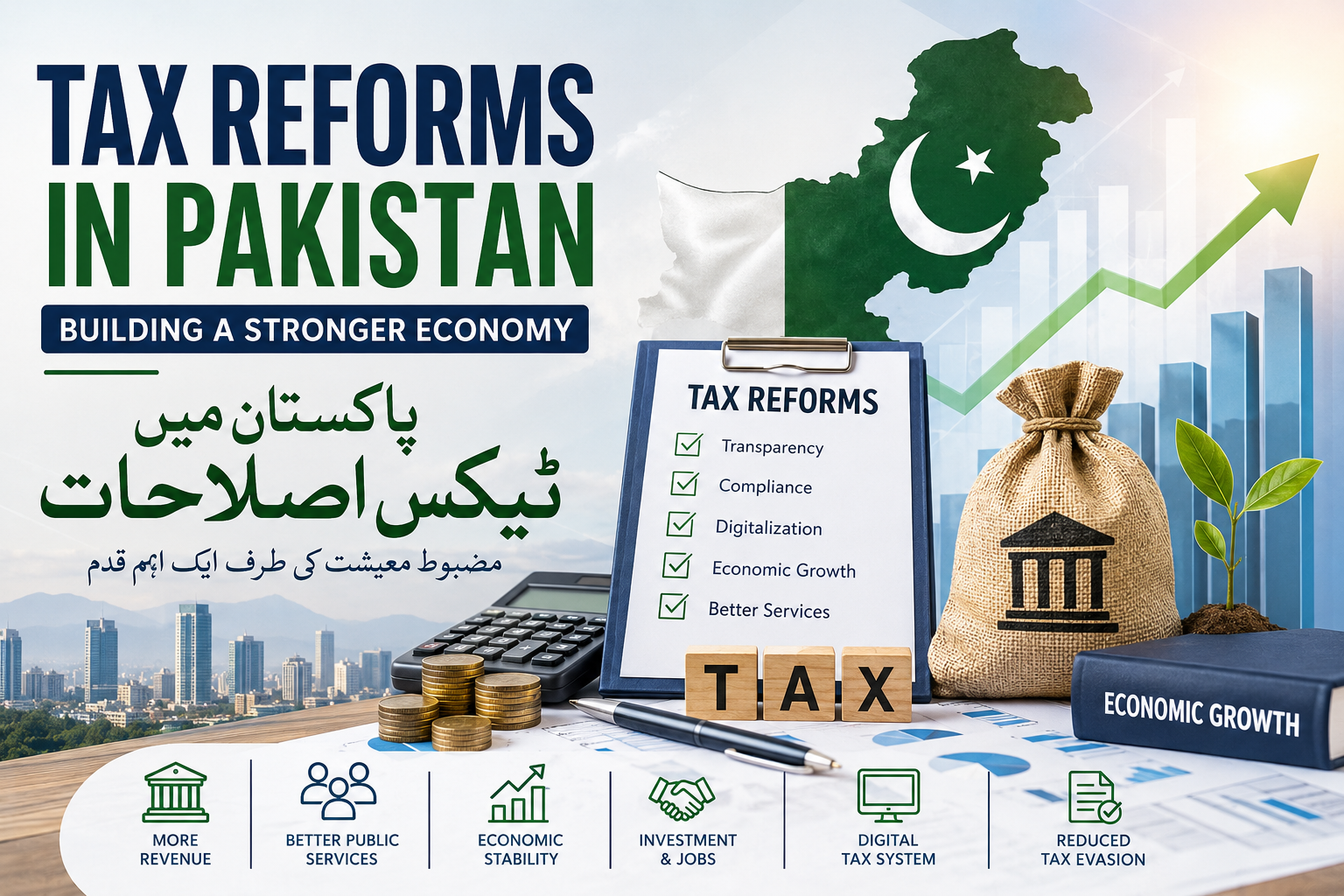
پاکستان میں ٹیکس اصلاحات Tax Reforms in Pakistan 2026
پاکستان کی معیشت کو درپیش بڑے چیلنجز میں کم ٹیکس وصولی، ٹیکس چوری، محدود ٹیکس نیٹ اور مالی خسارہ شامل ہیں۔ یہی وجہ ہے کہ گزشتہ چند برسوں سے حکومت پاکستان مسلسل Tax Reforms in Pakistan پر زور دے رہی ہے تاکہ محصولات میں اضافہ، معیشت کی دستاویز بندی (Documentation) اور عوامی خدمات کو بہتر بنایا جا سکے۔
ٹیکس کسی بھی ملک کی ترقی کی بنیاد ہوتا ہے۔ ترقی یافتہ ممالک اپنی آمدنی کا بڑا حصہ ٹیکس سے حاصل کرتے ہیں، جبکہ پاکستان میں ٹیکس ٹو جی ڈی پی (Tax-to-GDP Ratio) اب بھی نسبتاً کم ہے۔ یہی وجہ ہے کہ حکومت کو اکثر قرضوں پر انحصار کرنا پڑتا ہے۔
ٹیکس اصلاحات کیا ہیں؟
ٹیکس اصلاحات سے مراد ایسے اقدامات ہیں جن کے ذریعے ٹیکس نظام کو آسان، شفاف، منصفانہ اور مؤثر بنایا جاتا ہے۔ ان اصلاحات کا مقصد زیادہ سے زیادہ افراد اور کاروبار کو ٹیکس نیٹ میں شامل کرنا اور ٹیکس چوری کو روکنا ہے۔
پاکستان میں اہم ٹیکس اصلاحات
ایف بی آر (FBR) کی ڈیجیٹلائزیشن
آن لائن ٹیکس ریٹرن فائلنگ
پوائنٹ آف سیل (POS) سسٹم
ای-انوائسنگ (E-Invoicing)
نان فائلرز پر اضافی ٹیکس
رئیل اسٹیٹ اور ریٹیل سیکٹر کی دستاویز بندی
بینکنگ اور ڈیجیٹل ادائیگیوں کا فروغ
ٹیکس اصلاحات کے فوائد
حکومتی آمدنی میں اضافہ
ترقیاتی منصوبوں کے لیے زیادہ وسائل
بیرونی قرضوں پر انحصار میں کمی
سرمایہ کاری کے بہتر مواقع
کاروباری ماحول میں شفافیت
معیشت کی دستاویز بندی
پاکستان کو درپیش چیلنجز
ٹیکس چوری
کمزور نفاذ
غیر رسمی معیشت (Informal Economy)
عوام کا اعتماد کم ہونا
پیچیدہ ٹیکس قوانین
مستقبل کی تجاویز
ٹیکس قوانین مزید آسان بنائے جائیں۔
تمام کاروبار کو ڈیجیٹل نظام سے جوڑا جائے۔
چھوٹے کاروبار کے لیے آسان ٹیکس اسکیمیں متعارف کروائی جائیں۔
ٹیکس دہندگان کو مراعات دی جائیں۔
ایف بی آر میں جدید ٹیکنالوجی کا استعمال بڑھایا جائے۔
نتیجہ
پاکستان کی معاشی ترقی کے لیے Tax Reforms انتہائی ضروری ہیں۔ اگر حکومت شفاف نظام، ڈیجیٹل اصلاحات اور مؤثر نگرانی جاری رکھتی ہے جبکہ عوام بھی ایمانداری سے ٹیکس ادا کریں تو پاکستان مالی طور پر زیادہ مضبوط اور خودمختار بن سکتا ہے.
Tax reforms have become one of the most important economic priorities in Pakistan. With a low tax-to-GDP ratio, widespread tax evasion, and a large undocumented economy, Pakistan needs an efficient tax system to ensure sustainable economic growth.
Tax reforms are designed to simplify tax laws, increase transparency, expand the tax base, and improve revenue collection. These reforms also help reduce dependence on foreign loans while strengthening public finances.
What Are Tax Reforms?
Tax reforms are changes made to tax policies and administration to create a fair, transparent, and efficient taxation system. Their main objective is to increase compliance while reducing tax evasion.
Major Tax Reforms in Pakistan
Digitalization of FBR services
Online tax return filing
POS Integration
Electronic invoicing
Expansion of the tax base
Documentation of the retail sector
Increased monitoring of high-income individuals
Promotion of digital payments
Benefits of Tax Reforms
Higher government revenue
Better public services
Reduced fiscal deficit
Improved investment climate
Increased transparency
Sustainable economic development
Challenges
Pakistan still faces several obstacles:
Tax evasion
Informal economy
Complex tax regulations
Low public trust
Weak enforcement
Future Recommendations
Simplify tax laws.
Promote digital tax systems nationwide.
Expand taxpayer education.
Encourage voluntary tax compliance.
Strengthen FBR through technology and data analytics.
Conclusion
Tax reforms are essential for Pakistan’s long-term economic stability. A transparent, technology-driven, and fair taxation system can significantly increase government revenue, improve investor confidence, and reduce dependence on external borrowing. Sustainable tax reforms will ultimately contribute to a stronger and more resilient Pakistani economy.