

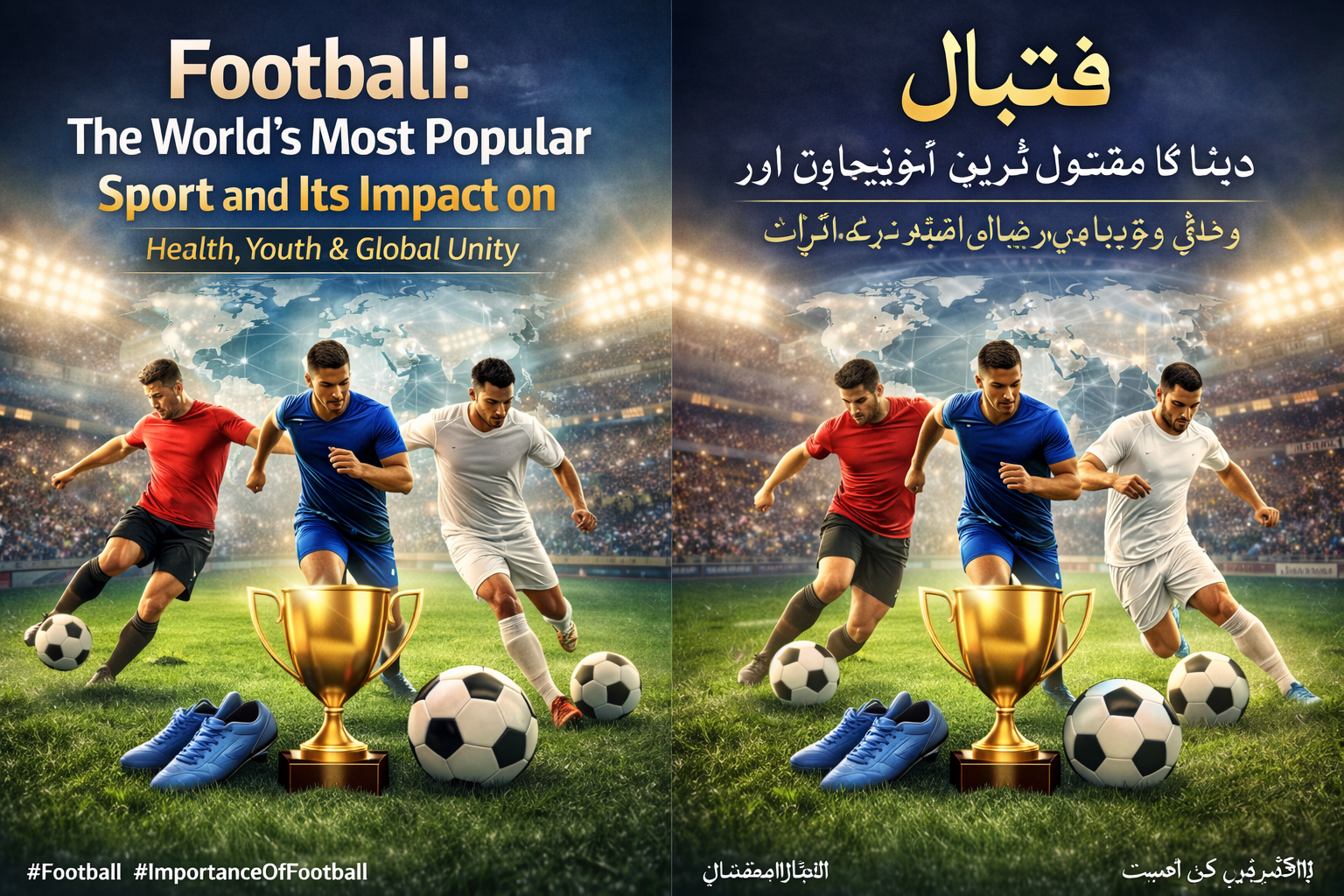
Football: The World’s Most Popular Sport and Its Impact on Health.
Football is the most popular sport in the world, played and loved by millions across different cultures, countries, and age groups. From small streets to massive stadiums, football connects people through passion, teamwork, and competition. Its simplicity and excitement make it accessible to everyone, regardless of background or resources.
One of the greatest benefits of football is its role in physical fitness. Football is a high-intensity sport that improves stamina, muscle strength, coordination, and flexibility. Regular football players enjoy better heart health, stronger bones, and improved metabolism. Running, passing, and quick movements help burn calories and reduce the risk of obesity and lifestyle-related diseases.
Football is equally powerful for mental health. Playing football reduces stress, anxiety, and mental fatigue. It helps players develop confidence, emotional control, and decision-making skills. Being part of a team gives players a sense of belonging, which is especially important for young people. The joy of scoring a goal or supporting teammates boosts motivation and positivity.
Another key aspect of football is teamwork and discipline. Football teaches players how to work together toward a common goal. Every position on the field is important, and success depends on coordination and trust. Players learn discipline by following rules, respecting referees, and maintaining fair play. These lessons help shape strong character and responsible behavior off the field as well.
Football also plays a major role in youth development. For many young people, football provides direction, purpose, and hope. It keeps them physically active and away from negative habits. Many professional footballers started from humble backgrounds, proving that dedication and hard work can change lives. Football academies and school teams help nurture talent and confidence at an early age.
On a global level, football is a symbol of unity and peace. International tournaments like the FIFA World Cup bring nations together, creating moments of shared happiness and respect. Football breaks language and cultural barriers, allowing people to communicate through the love of the game. It promotes sportsmanship and mutual understanding among countries.
In conclusion, football is much more than a sport. It is a lifestyle that promotes health, teamwork, discipline, and unity. Whether played professionally or casually, football has the power to transform individuals and societies, making it truly the world’s game.